
What Is an Automatic Transmission and How Does It Work?
Driving through traffic already asks plenty from you, but choosing every gear doesn’t have to be part of it. Once you select Drive, you can control your speed and let the vehicle handle each gear change as the road opens up, slows down, or climbs. It’s a simple experience from behind the wheel, even though a lot of coordinated mechanical action is taking place underneath you.
So, what is an automatic transmission, and how does it manage those shifts without any extra input from the driver? Let’s follow what happens after you put the vehicle in gear.
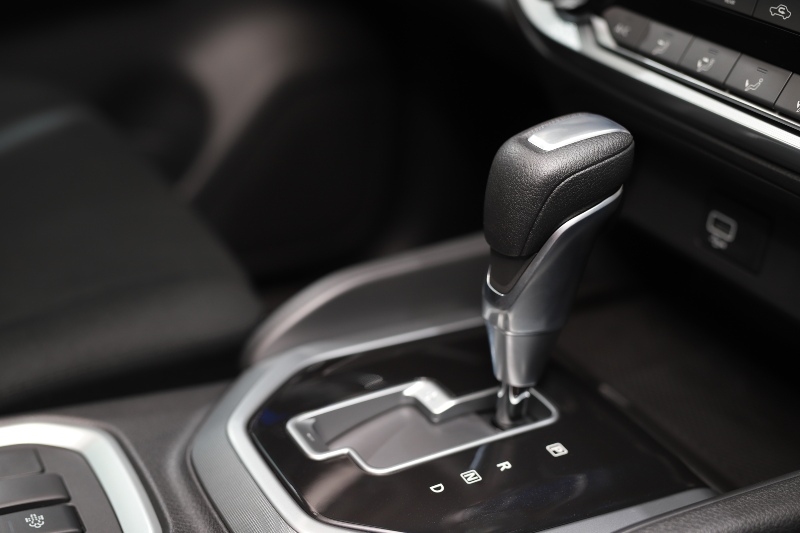
What Is an Automatic Transmission?
An automatic transmission keeps the engine operating within a suitable range as your vehicle travels at different speeds. Lower gear ratios give the wheels more turning force when you pull away from a stop. Higher ratios let the vehicle travel faster without requiring the engine to spin at the same pace as the wheels. And the automatic gearbox selects those ratios for you.
Instead of coordinating a clutch pedal and gear lever, you use the accelerator and brake while the transmission responds to the vehicle’s speed and power needs.
How Does an Automatic Transmission Work?
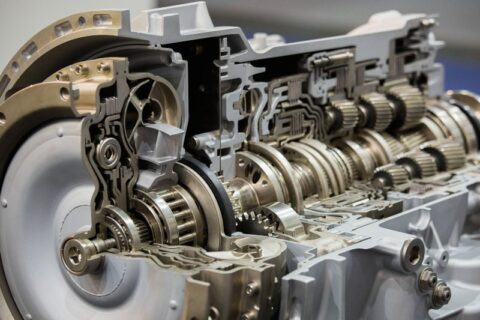
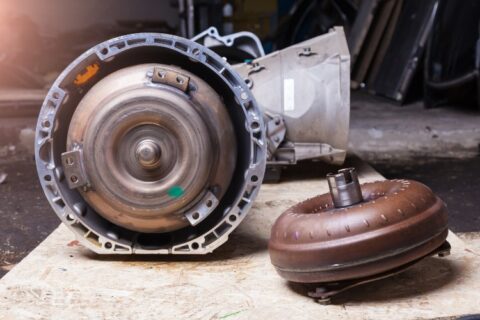
When the engine is running, it turns a pump inside the torque converter. The pump pushes transmission fluid toward a turbine, which carries that turning force into the transmission. From there, a planetary gearset can produce several forward ratios from the same group of gears.
Hydraulic pressure applies specific clutches or bands to hold and turn different parts of that gearset. Meanwhile, electronic controls monitor how fast you’re traveling and how far you’ve pressed the accelerator. That information determines which ratio the transmission engages and explains how an automatic transmission works through every upshift and downshift.
The Benefits of an Automatic Transmission
Once you select a driving range, the transmission takes responsibility for choosing each forward gear. That creates several everyday benefits of an automatic transmission, including:
- Less Driver Coordination – You can accelerate and slow down without timing each gear change or operating a separate clutch pedal.
- Easier Low-Speed Driving – A traditional automatic can creep forward as you release the brake, giving you precise control in traffic or parking lots.
- Consistent Gear Selection – Electronic controls respond to vehicle speed and accelerator input, then call for a suitable ratio as driving conditions develop.
- Both Hands Stay Available – Because you aren’t repeatedly reaching for a gear lever, you can keep both hands available for steering.
Automatic vs. Manual Transmission
An automatic car transmission and a manual transmission ultimately perform the same job, but they divide responsibility differently. In a manual vehicle, you decide when to change gears and coordinate the clutch, accelerator, and gear lever to complete each shift. An automatic makes those forward gear selections after you put the vehicle in Drive.
A manual gives you direct control over every shift. An automatic reduces the number of actions you need to perform, which can be particularly useful when traffic requires frequent slowing, stopping, and accelerating.
Common Automatic Transmission Myths
Modern automatics have changed substantially, so older generalizations don’t accurately describe every vehicle. Fuel economy and performance depend on the transmission design, the number of available ratios, the vehicle, and how everything was engineered to operate together. The automatic transmission benefits you experience in one model may not carry over exactly to another.
Automatic operation also doesn’t eliminate maintenance. The transmission still relies on fluid, seals, clutches, sensors, and other components. And since different designs require specific fluids and service procedures, one maintenance approach won’t apply to every automatic.
Maintenance Tips for Automatic Vehicles
Your owner’s manual will tell you which fluid the transmission needs and when the manufacturer recommends servicing it. Follow that schedule rather than relying on a general mileage rule, especially if you regularly tow or place heavier demands on your vehicle.
You should also take an occasional look at the pavement where you park. If fluid begins collecting underneath the vehicle, or your automatic vehicle transmission starts hesitating or shifting differently, arrange a diagnosis. Continuing to drive with too little fluid or an unresolved internal problem may allow additional components to wear or overheat.
Give Your Automatic the Service It Needs
Every automatic shift depends on fluid pressure, electronic controls, and internal components carrying out their jobs at the correct moment. When that coordination changes, our team at Gold Coast Transmissions can test the system and identify what’s interrupting its normal operation.
Our ASE-certified technicians specialize in transmission diagnostics and repairs, including complete rebuilds when internal damage calls for one. We’ll explain what we find and provide a clear estimate before you make a repair decision. Contact our Fort Lauderdale or Davie shop today to schedule your free diagnosis and get your automatic shifting properly again.
You can put two different vehicles in Drive and notice right away that they don’t accelerate or change gears in quite the same way. One may move…
Your automatic transmission relies on dozens of moving parts working in sync, but few are as critical as the torque converter. This fluid-filled…